
When Your Partner Cheats with a Credit Card
When Money Becomes a Betrayal: What Financial Infidelity Really Means
Financial infidelity is when one partner deliberately hides money-related behavior from the other — think secret credit cards, hidden debt, undisclosed accounts, or concealed spending. It’s not an accident or a forgotten lunch receipt. It’s intentional deception about money.
Here’s what you need to know at a glance:
- What it is: Hiding financial information or behavior from your partner on purpose
- Common examples: Secret credit cards, hidden savings accounts, undisclosed debt, concealed purchases, lying about income
- How common it is: Over 4 in 10 people have committed some form of financial infidelity
- Why it matters: 85% of those who engaged in it say it damaged their relationship
- How it feels: Research shows it can cause the same emotional pain as physical cheating
Money is already a sensitive subject in most relationships. Studies show that 41% of married couples say fighting about money feels almost unavoidable. But there’s a big difference between disagreeing about finances and hiding them.
Consider this: Molly discovered that her husband had quietly opened several credit cards, made impulse purchases he never mentioned, and stashed the statements where she’d never look. By the time she found out, the debt had grown into something that threatened both their financial future and their marriage.
That’s financial infidelity — and it’s more common than most people think.
If you’re also worried that your spouse’s hidden financial behavior could affect your own tax liability or legal standing, you’re not alone. That’s exactly what this guide addresses.
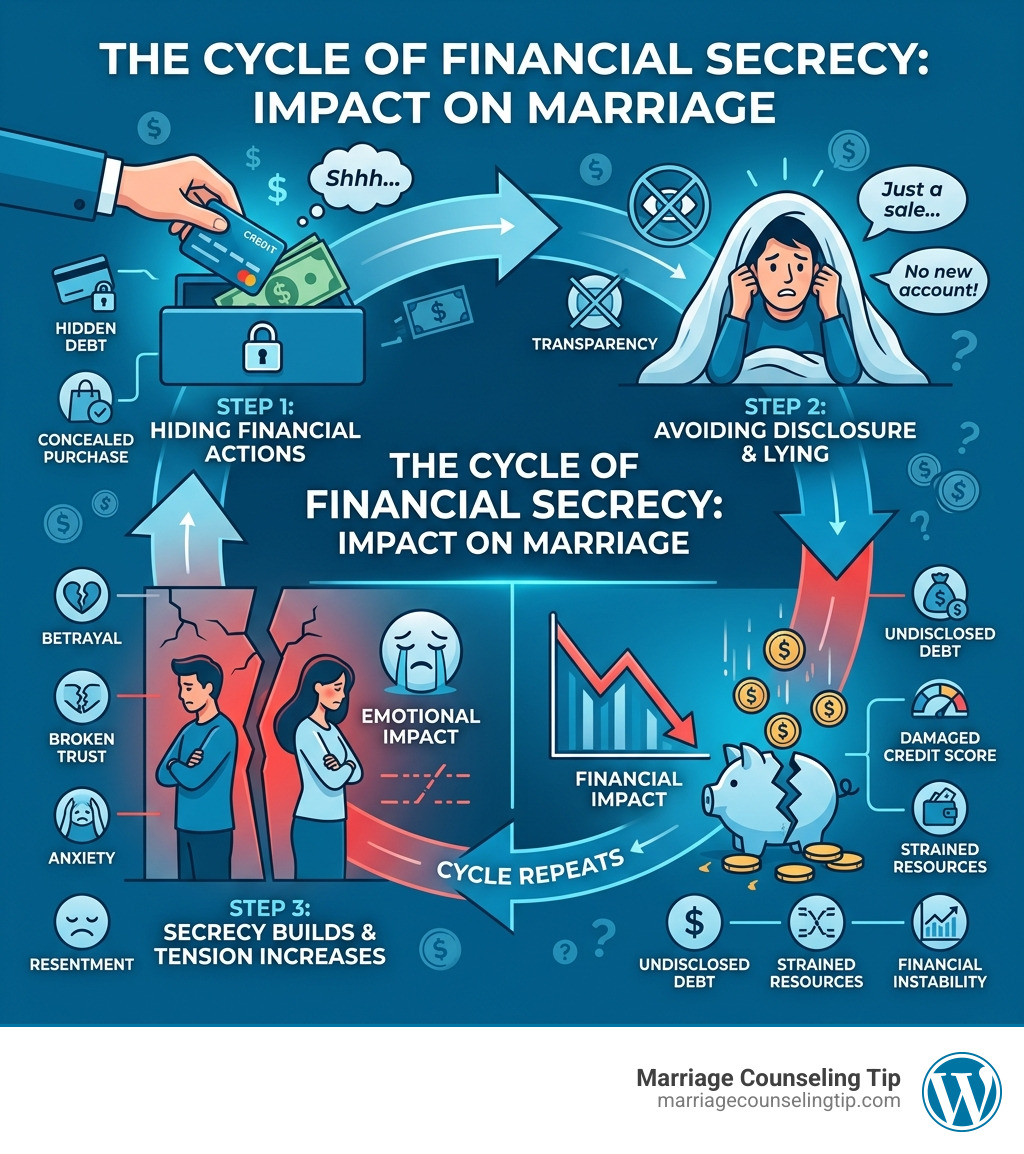
What is Financial Infidelity?
At its core, financial infidelity occurs when one partner in a committed relationship engages in financial behaviors they know their significant other would disapprove of and intentionally fails to disclose them. It is more than just a “white lie” about the price of a pair of shoes; it is a systematic breach of the financial transparency that forms the bedrock of a healthy partnership.
Experts often categorize this behavior as “marital financial deception” or even a “money disorder.” According to Financial Infidelity: When Couples Lie to Each Other About Money, this can range from stashing cash in a secret “rainy day” fund to amassing tens of thousands of dollars in credit card debt without the other partner’s knowledge.
Intentionality vs. Irresponsibility
It is important to distinguish between being bad with money and being deceptive with it.
- Financial Irresponsibility: Forgetting to mention a small lunch purchase or accidentally overspending the grocery budget by twenty dollars.
- Financial Infidelity: Intentionally opening a credit card in your own name to hide a shopping habit, or lying about a bonus you received at work so you can spend it privately.
Many people wonder, is hiding money from your spouse wrong? While some argue for “financial privacy,” in a committed relationship where resources are merged, secrecy often leads to a breakdown in trust. If you are hiding money because you fear your partner’s reaction, you are already entering the territory of infidelity.

Red Flags and Common Signs of Financial Betrayal
If you suspect your partner is “cheating” with a credit card or hiding assets, your intuition is often your first warning sign. However, financial deception is designed to be invisible. You may need to look for specific behavioral shifts and paper trails.
Common Red Flags
- Unexplained Withdrawals: Large or frequent cash withdrawals from joint accounts that don’t have a clear purpose.
- Secret Accounts: Finding mail from a bank you don’t use or discovering a new app on your partner’s phone for a digital bank or investment platform.
- Password Changes: Suddenly being locked out of accounts you previously had access to, or a partner becoming hyper-protective of their phone and laptop.
- Defensiveness: If a simple question like “How much did that cost?” results in an angry outburst or a lecture about “control,” it may be a deflection tactic.
- Missing Mail: If you notice your partner is always the first one to the mailbox or if certain bank statements have stopped arriving, they may have switched to paperless billing to hide the evidence.
- Unexpected Debt: Discovering a low credit score when applying for a joint loan, or receiving calls from debt collectors for accounts you didn’t know existed.
Lying to your spouse about how much money you spent is often the “gateway” behavior. It starts small but can quickly escalate into a mountain of debt.
Normal Disagreement vs. Financial Infidelity
| Normal Financial Disagreement | Financial Infidelity |
|---|---|
| Arguing over the budget for a vacation | Hiding the fact that you already booked the vacation on a secret card |
| Forgetting to record a small transaction | Intentionally deleting transaction notifications |
| Disagreeing on whether to save or spend a bonus | Lying about the existence or amount of a bonus |
| One partner being “the spender” and the other “the saver” | One partner secretly draining a joint savings account |
The Psychological and Legal Impact of Financial Betrayal
The fallout of financial infidelity isn’t just a lower bank balance. It strikes at the heart of the relationship’s security. When we merge our lives with someone, we are also merging our risks.

The Emotional Toll of Financial Infidelity
For many, the emotional wound is deep. In fact, 52% of people believe financial cheating is just as bad as physical cheating, and 12% believe it is actually worse. This is often referred to as “betrayal trauma.”
According to Financial Infidelity: The Cost of Keeping Secrets | Psychology Today Canada, the secrecy creates an environment of suspicion. Once you realize your partner has been lying about money for years, you begin to wonder what else they have been lying about. This can lead to a total erosion of intimacy. If you are struggling with this, understanding infidelity therapy: What to expect in the first month can help you navigate the initial shock and anger.
Legal Consequences and Hidden Assets
Beyond the heartbreak, there are cold, hard legal realities. If a relationship ends in divorce, financial deception can lead to “wasteful dissipation of marital assets.”
- Divorce Settlements: Courts do not look kindly on hidden accounts. If a judge discovers one partner hid money, they may award the other partner a larger share of the remaining assets as a penalty.
- Is hiding assets from spouse illegal? In the context of divorce proceedings, yes. It is considered fraud and can lead to severe legal penalties. You can learn more about this at is hiding assets from spouse illegal?
- Is hiding money from your spouse a crime? While generally not a “jail-time” crime during a marriage, it can become a criminal matter if it involves tax evasion or fraud. See more details here: is hiding money from your spouse a crime?
- Tax Liability: This is perhaps the most dangerous consequence. If your partner hides income or claims false deductions on a joint tax return, the IRS considers both of you responsible for the back taxes, interest, and penalties.
Steps to Recover and Rebuild Trust
Recovery is possible, but it requires more than just paying off the credit card. It requires a total overhaul of how you communicate about money.
Coming Clean About Financial Infidelity
The first step is total, unvarnished honesty. The “trickle-truth” method—where the betrayer only admits to what they think the other person has already found out—is toxic. It resets the clock on healing every time a new secret emerges.
We recommend a “Full Disclosure” session. This involves:
- Admitting the full scope: No more “I only owe $2,000” when the real number is $10,000.
- Providing Evidence: Bringing all bank statements, credit card bills, and tax documents to the table.
- Taking Responsibility: Not blaming the other partner’s “strictness” for the need to hide spending.
For a structured approach to this difficult time, following a marriage counseling for infidelity: A step-by-step roadmap can provide the safety and mediation needed to prevent the conversation from devolving into a shouting match.
Strategies for Prevention and Financial Intimacy
Once the truth is out, you need new systems to ensure it never happens again.
- Money Dates: Schedule a 20-minute “money date” once a week. This isn’t for fighting; it’s for reviewing the week’s spending and checking in on goals.
- The Allowance System: Many couples find success by having a joint account for bills and individual “no-questions-asked” accounts for personal spending. This allows for autonomy without secrecy. You might ask, is it OK to hide money from your spouse? In this context, it’s not “hiding”—it’s an agreed-upon amount of private fun money.
- Collaborative Budgeting: Use tools like EveryDollar or other budgeting apps so both partners have a real-time view of the household’s financial health. Transparency is the best antidote to suspicion.
Frequently Asked Questions about Money Secrets
Is hiding money from your spouse illegal?
While hiding money during a marriage isn’t typically a criminal offense in the traditional sense, it can have massive legal repercussions during a divorce or when filing taxes. In a divorce, hiding assets is considered a violation of the law in many jurisdictions and can lead to being held in contempt of court. For a deeper look at the legalities, check out is hiding money from your spouse illegal?
How prevalent is financial cheating in relationships?
It is shockingly common. Research shows that 43% of US adults who have combined finances confess to some act of financial deception. Furthermore, 31% of couples admit to having a credit card their spouse is unaware of. It affects all demographics, though reasons for the behavior can vary based on gendered money views—with some partners seeking “competitive” control and others seeking “collaborative” safety.
Why do people hide money from their partners?
The reasons are rarely “evil.” Most people lie because of:
- Fear of Disapproval: 61% of people hide spending because they know their partner will be upset.
- Autonomy: A desire to feel in control of their own life, especially if the other partner is very controlling with the budget.
- Embarrassment: Feeling ashamed of a debt or a “failed” investment.
- Mental Health Issues: Compulsive spending is often linked to ADHD, bipolar disorder, or depression.
Conclusion
Financial infidelity is a heavy burden, but it doesn’t have to be the end of your marriage. By moving from a culture of secrecy to one of radical transparency, couples can actually emerge from this crisis with a stronger, more intimate bond than they had before.
However, the “numbers” side of the betrayal needs professional attention—especially when the IRS is involved. If your partner’s secret spending has left you with a mountain of tax debt, you need to protect yourself. At Marriage Counseling Tip, we specialize in helping spouses navigate the complexities of IRS back taxes and marital strain.
Whether you need to explore innocent spouse relief to protect your assets from a partner’s tax liability or you need a roadmap for rebuilding trust through counseling, we are here to help. Don’t let a secret credit card ruin your financial future.